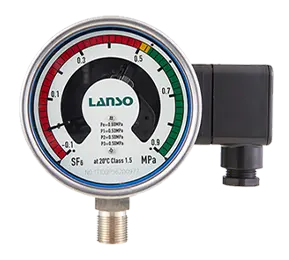
SF6 relay daily maintenance
SF6 relay is an important instrument used in high voltage switchgear applications. Proper maintenance of SF6 relays is crucial to ensure their effective operation and provision of accurate data to control rooms. Some of the daily maintenance activities for SF6 relays include:
Check for physical damage
Check if the density relay has any physical damage, such as cracks or fractures. Also, ensure that the density relay is securely mounted on the equipment and there are no signs of looseness.
Check for leaks
Check if there are any gas leaks around the density relay. Any leaks can be detected by using soap solution and observing for bubbles. Any leaks detected should be repaired promptly.
Clean the relay
Using a clean dry cloth, clean the density relay and remove any dust or debris that may have accumulated on it.
Regular inspection and troubleshooting of SF6 relay
As a professional pressure measurement instrument, regular inspection and troubleshooting of SF6 relays are crucial to ensure their effective operation and provision of accurate data to control rooms. Some of the regular inspection and troubleshooting activities for SF6 relays include:
Regularly check indicator and contact accuracy of the density relay to ensure accurate measurement of gas pressure. If the pressure gauge is inaccurate, it should be replaced promptly.
Check contacts
Check the contacts on the density relay to ensure that they are clean and free of any corrosion. Corroded contacts can cause the contacts to be non-conductive and lead to the failure of the density relay.
Resolve common problems
Common issues with SF6 relay include inaccurate readings, inability to trigger alarms or lock-out signals. These issues can usually be resolved by replacing malfunctioning parts or cleaning and adjusting as necessary.
Calibration of SF6 relay
As a mechanical pressure indicator, SF6 relays need to be calibrated to ensure they provide accurate and reliable data to control rooms. Calibration should be done regularly and any deviations from expected values should be promptly addressed. The calibration process involves comparing the relay's readings with a known reference value (such as a calibration pressure gauge) and adjusting the relay until it provides accurate readings, and any necessary repairs or replacements made as required.
In summary, proper maintenance and upkeep of SF6 relays are crucial to ensure their effective operation and provision of accurate data to control rooms. By following these maintenance and upkeep practices, SF6 relays can help ensure the reliable operation of high voltage switching equipment systems.