SF6 Gas Density Monitor
 SF6 gas density transmitter
 SF6 gas valve
 SF6 Gas Detection Analyzer Series
 Leakage Current Monitoring Series
 Transformer Accessories Series
 +86-400-820-1296
Leave Your Message
-
CONTACT NUMBER
-
 CONTACT NUMBER
So, why pick a smart densimeter when you're after accurate testing?
Getting density measurements right really matters when you're working with fuels, chemicals, beverages, or pharmaceuticals. Even a tiny error can throw off concentration results, mess with batch release calls, and chip away at customer trust. That's where ASTM International's ASTM D4052-22 comes in—it lays out oscillating U-tube procedures for figuring out liquid density and relative density. And honestly, the standard keeps stressing the basics: control the temperature, verify your instrument, and make sure your sampling is repeatable. Honestly, a smart densimeter just brings all those controls together way more consistently than most manual methods do.
Honestly, the real value shows up when you're doing everyday lab work. Picture this: a technician fills the measuring cell, glances at the temperature on the display, and—bam—a digital density result pops up within seconds. A modern Density Sensor can keep track of measurements, call out unstable readings, and even help with automatic compensation. NIST reference data also shows just how much temperature matters—especially when you're testing water-based liquids, solvents, and petroleum products. And ISO 15212-1 goes a step further by laying out performance considerations for oscillation-type density meters. So really, these standards give you a much stronger basis than, say, going by looks or relying on inconsistent manual readings.
But let’s be real—smart testing isn’t some hands-off, effortless thing. Dirty cells, air bubbles, bad sampling, calibration that’s off… all of that can still throw off your results. No instrument is magic. A 2023 Grand View Research report pointed to lab automation as a growing market, which shows there’s more investment in connected measurement systems. Still, a growing market doesn’t replace good technical judgment. People using these systems should check traceable reference materials, stick to ASTM procedures, and keep good maintenance records. Some manufacturers like to say their instruments are almost perfectly accurate. But in a real lab? There’s vibration, viscosity shifts, and—let’s be honest—operator differences. That’s a pretty important caveat to keep in mind. So when you pick a smart densimeter, you're really choosing tighter control, cleaner records, and quicker decisions—all while still keeping that disciplined human check in the loop.
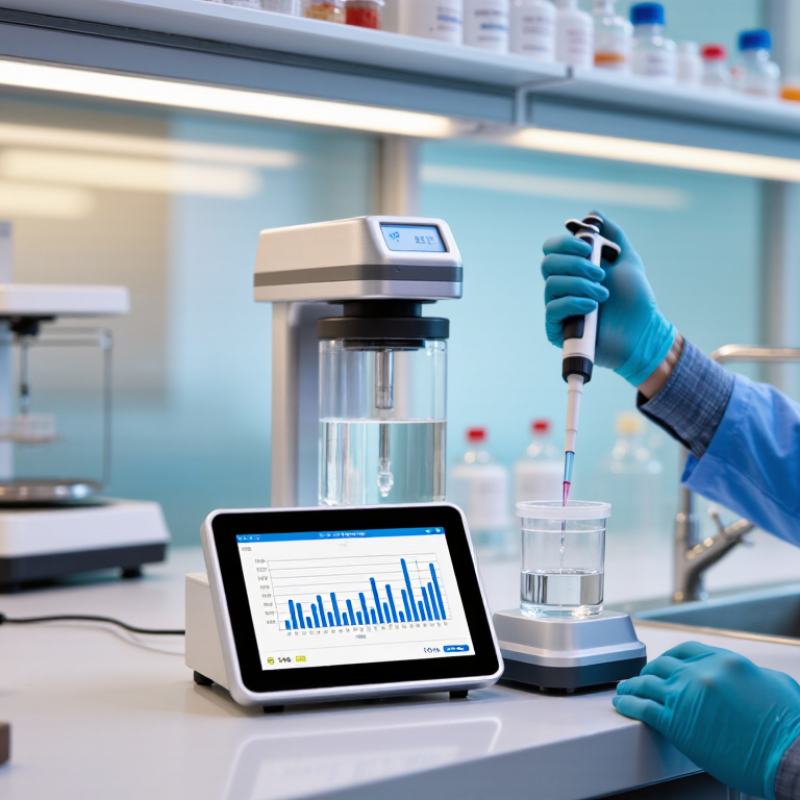
A smart densimeter is a digital instrument that measures a liquid’s density with guided software and connected sensors. Unlike a basic glass hydrometer, it can record results, correct temperature effects, and reduce manual reading errors. The sample usually enters a small measuring cell, where an oscillating tube detects changes caused by liquid mass.
In daily testing, this process feels practical. A technician can scan a sample, view the density value, and compare it with a stored specification. A Fuel Density Sensor may support fuel-related measurements by tracking density changes during production or storage. Temperature compensation matters because a liquid can expand in a warm room and appear less dense. The device must still be calibrated with suitable reference materials.
Good instruments also show warnings when bubbles, contamination, or unstable readings affect the test. That detail protects the result. I still inspect the sample cup and repeat unusual measurements, because automation does not remove every human mistake. Cleaning is easy to underestimate. A thin residue can remain inside the cell and shift the next reading.
Smart connectivity can create useful records with time, operator, temperature, and sample identification. This supports traceability during quality checks and maintenance reviews. However, wireless data should be checked against the original reading. Software can simplify testing, but it cannot judge a damaged sample or poor sampling method.
| Testing Dimension | Smart Densimeter Capability | Why It Supports Accurate Testing | Typical Laboratory Reference |
|---|---|---|---|
| Measurement Principle | Electronic measurement using an oscillating U-tube, where the oscillation frequency changes according to the density of the sample. | The method requires a small sample volume and provides fast, repeatable measurements without relying on visual reading. | Commonly used for liquids, solutions, fuels, oils, and chemical samples. |
| Density Resolution | Many laboratory instruments provide a displayed resolution of approximately 0.0001 g/cm³. | A finer display resolution helps identify small differences between samples, provided the instrument is properly calibrated. | 0.0001 g/cm³ is a common laboratory resolution level. |
| Measurement Accuracy | Typical laboratory accuracy may be approximately ±0.0005 g/cm³, depending on the instrument, temperature, sample, and calibration. | Accuracy is improved when the sample is homogeneous, free of bubbles, and measured at a controlled temperature. | The exact specification must be confirmed from the instrument’s technical documentation. |
| Repeatability | Well-maintained oscillating U-tube systems commonly achieve repeatability in the range of about 0.0001 g/cm³. | Consistent repeated results reduce operator-dependent variation and support reliable quality control. | Performance varies with viscosity, volatility, temperature, and sample preparation. |
| Sample Volume | Many digital systems require approximately 1–2 mL of liquid, although the required volume varies by measuring-cell design. | Low sample consumption is useful when samples are expensive, hazardous, or available only in limited quantities. | The minimum volume should be checked before testing. |
| Temperature Control | Integrated temperature measurement and, in some systems, built-in temperature regulation for a defined operating range. | Density changes with temperature, so temperature control is essential for comparable and traceable results. | Common test points include 20 °C or 25 °C, depending on the applicable method. |
| Automatic Calculations | Software can calculate density and may support derived values such as specific gravity, concentration, or API gravity when configured for the application. | Automated calculations reduce transcription and formula errors during routine testing. | Conversion results depend on the selected reference temperature and validated correlation. |
| Calibration | Calibration is commonly performed with certified reference materials, such as air and purified water, according to the instrument procedure. | Regular calibration compensates for measurement-cell and environmental effects and supports traceability. | Calibration frequency should follow laboratory procedures and usage conditions. |
| Bubble Detection | Some smart systems provide visual or software-assisted warnings for bubbles, unstable readings, or incomplete filling. | Air bubbles in the measuring cell can produce falsely high or unstable density results. | Operators should still inspect the cell and sample flow when results are abnormal. |
| Data Management | Digital storage, sample identification, user records, result export, and connection to laboratory information systems may be available. | Electronic records improve traceability, reduce manual transcription, and simplify audit review. | Available functions depend on the instrument configuration and software. |
| Cleaning and Verification | Guided cleaning routines and verification checks can help operators maintain the measuring cell and identify contamination. | Residue, cross-contamination, and incomplete drying are common sources of density error. | Cleaning materials must be compatible with the sample and cell construction. |
| Best-Practice Conditions | Use a representative, homogeneous sample; remove bubbles; stabilize temperature; calibrate regularly; and verify results with suitable reference materials. | Correct operating technique is necessary because smart automation cannot compensate for poor sampling or contamination. | Follow the applicable laboratory standard and documented method. |
Temperature control reduces errors caused by changing sample heat. A built-in sensor tracks temperature continuously. Automatic compensation helps. Bubble detection and guided filling also improve results. Certified reference materials support calibration. However, poor sampling can still defeat good equipment.
Air bubbles usually make the sample appear less dense. One tiny bubble can shift the displayed value. Inspect the measurement cell under bright light. Fill slowly and remove trapped air. The screen may look precise. The sample may not be.
Automation can control temperature, sample volume, timing, and result recording. It reduces differences between operators. Automatic records preserve timestamps and calibration details. This helps during reviews. Automation does not remove uncertainty. That part is easy to forget.
Use the same sample volume each time. Keep the waiting period consistent. Follow one cleaning method. Fill carefully without creating foam. A fixed routine improved repeatability in practice. I once assumed this was obvious. It was not.
Use clean equipment and certified reference liquids. Select references covering the expected density range. Allow the instrument and sample to reach stable temperature. Record reference values, temperatures, lot details, and expiry dates. Check the zero point. Do not adjust too quickly.
Clean the measurement cell again. Confirm stable temperature. Inspect the sample path for residue or blockage. Check seals, tubing, and connectors. A dirty cell can imitate sensor drift. Not every fault is electronic.
Rinse the measurement cell after every sample. Use compatible cleaning fluids only. Aggressive solvents may damage internal surfaces. Inspect the cell under good lighting. Check for leaks and residue. Small oversights happen.
Do not delete the reading immediately. Check the sample, temperature, bubbles, cell, and cleaning process. Review calibration status and stored records. Add a manual observation when needed. An abnormal result may reveal contamination or poor handling. Digital tools help, but judgment remains necessary.
A smart densimeter is a digital instrument designed to determine the density of liquids and other suitable samples with speed, consistency, and minimal operator effort. It measures density by analyzing how a sample responds inside a precisely controlled measuring cell, then converts the result into a clear digital reading. An integrated Density Sensor, temperature monitoring, and automated calculations help compensate for changing conditions and improve accuracy. These systems can often analyze beverages, chemicals, oils, pharmaceutical solutions, and other compatible materials, provided that the sample is prepared correctly and handled safely.
Digital automation reduces measurement errors by guiding users through testing steps, detecting unstable readings, and limiting manual calculation mistakes. To maintain reliable performance, the instrument should be calibrated with suitable reference materials at recommended intervals, while the measuring cell and sample-contacting parts should be cleaned after use. Regular inspection, proper temperature control, and careful removal of air bubbles are also essential. With consistent calibration and maintenance, a smart densimeter can provide dependable results and support efficient quality control.