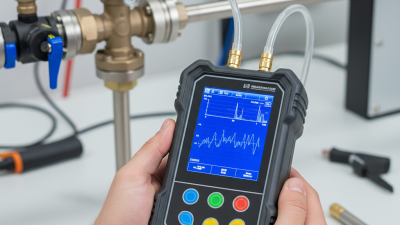
Hey, as 2026 gets closer, the market for smart densimeters is really gearing up for some serious growth. I read a recent report from MarketsandMarkets, and it’s saying that worldwide, this market could hit over a billion dollars by then. That’s mainly thanks to tech advancements and the rising need for precise measurements across different industries. One feature that’s becoming pretty important is "Temperature Compensation"—you can check out more about it [here](https://www.lansoinstruments.com/ce-certification-china-temperature-compensation-suppliers-manufacturers). Basically, it helps make sure density readings stay accurate even when the temperature’s all over the place.
Big players like Anton Paar and KROHNE are really pushing the envelope with smart densimeters. They’re packing in some pretty cool sensor tech that not only makes measurements more reliable but also connects easily with data systems, which is a huge plus. Still, it's not all smooth sailing. Some devices have a hard time performing consistently when temperatures fluctuate. That’s where good Temperature Compensation methods come into play—they can really help improve accuracy and boost user confidence.
For companies looking to stay competitive, it’s clear they’ll need to throw some resources into R&D. The goal should be developing solutions that aren’t just accurate but also solve common issues in real-world scenarios. Especially in fields like pharma and food & beverage, where every little detail counts—making sure the tech keeps evolving is key. Going forward, understanding these trends and adapting quickly will be vital if you want to keep your edge in this space.

Top Smart Densimeter Trends for 2026: An Overview
As we approach 2026, the smart densimeter landscape is evolving rapidly. Industry reports indicate that demand for enhanced accuracy and automation in measuring density is on the rise. According to a recent market analysis, the global smart densimeter market is projected to grow at a CAGR of 12% from 2023 to 2026. This surge underscores the need for devices that not only measure density but also integrate seamlessly with other parameters, such as Temperature Indicators.
Emerging technologies are at the forefront of this transformation. Many modern smart densimeters are incorporating real-time data analytics. This capability allows users to monitor conditions remotely, potentially boosting productivity and efficiency. However, not all devices on the market are equally reliable. Users often report inconsistencies in performance, particularly with older models. As technology progresses, manufacturers must address these shortcomings to maintain credibility.
Additionally, the push for sustainability is shaping smart densimeter trends. Devices that minimize energy consumption and use eco-friendly materials are increasingly favored. However, balancing performance and environmental impact remains a challenge. Despite the promising advances, users express concerns about the longevity of devices. Continuous improvement in technology is essential, yet some models fall short in durability. These points invite critical reflection as the industry strives for innovations that meet user expectations while ensuring dependable performance.
Emerging Technologies in Smart Densimetry for 2026
Emerging technologies in smart densimetry are paving the way for enhanced measurement accuracy and reliability. According to a recent industry report, the global smart densimeter market is expected to grow by 20% annually, reaching a value of $2 billion by 2026. This growth is driven by advancements in sensor technology and data analytics. New
Fiber Optic Temperature
sensors are becoming crucial in this field. These sensors provide high precision and rapid response times, essential for various applications, such as environmental monitoring and industrial processes.
Data integration from smart densimeters is also evolving. The trend is shifting towards real-time data processing and mobile applications. Many professionals are focusing on the potential of AI-powered algorithms to enhance measurement capabilities. However, the challenge remains in the standardization of data formats.
Ensuring compatibility across different devices can be complex. Moreover, as more companies adopt these technologies, there is a constant demand for training personnel. It’s evident that while the industry is moving rapidly, these concerns need to be addressed for optimal implementation.
User experience is a critical aspect that often gets overlooked. The accuracy of measurements is only as good as the data collected. Smart densimeters need intuitive interfaces to allow users to leverage their full potential. Feedback mechanisms should enable users to understand the limitations of their measurements.
Balancing technological advancement and user-friendliness in smart densimetry is essential for future growth.
Key Features to Look for in Smart Densimeters
As the demand for smart densimeters grows, specific features become essential for effective operation. Users should prioritize precision and accuracy in measurements. Advanced sensors and algorithms often enhance these capabilities, ensuring that results are reliable for various applications. Reports indicate that devices with improved calibration methods significantly outperform older models. In fact, studies show that accuracy can increase by up to 30% with new technologies.
Connectivity is another vital aspect. Smart densimeters should easily integrate with other devices. This enables real-time data sharing and analysis, which is increasingly important in industrial settings. Many professionals rely on data analytics to make informed decisions. The ability for a smart densimeter to seamlessly connect with a Winding Temperature Gauge can provide a comprehensive overview of operational conditions.
User interface plays a significant role too. A clear, intuitive design enhances usability, especially in complex environments. Engaging visual displays can help users interpret data swiftly. However, some reports indicate that many devices still struggle with user engagement. There is room for improvement to address these challenges and to ensure that users can maximize the benefits of smart densimeter technology.
Applications of Smart Densimeters Across Industries
Smart densimeters are progressively transforming various industries with their advanced measurement capabilities. In the oil and gas sector, these devices play a crucial role in ensuring safety and efficiency. By precisely measuring fluid density, companies can optimize extraction processes. This precision can reduce waste, leading to significant cost savings. Furthermore, integrating an Oil Temperature Indicator ensures that operators can monitor fluid behavior under different temperature conditions.
In the environmental sector, smart densimeters are vital for monitoring water quality. These devices can detect changes in density that may indicate pollution or contamination. This capability enables rapid response to environmental hazards. Manufacturers now integrate real-time data analytics, which enhances decision-making. However, the learning curve for operators remains a challenge. As the technology advances, consistent training becomes essential.
The food and beverage industry also benefits from smart densimeters. They help maintain product quality by ensuring correct ingredient ratios. Maintaining a specific density is critical in brewing and fermentation processes. However, there are challenges. Occasionally, variations in temperature can affect density readings. This inconsistency requires careful calibration and monitoring. As industries adapt, the evolution of smart densimeters will continue to address these complexities.
Top Smart Densimeter Trends for 2026
This chart illustrates the projected growth of applications of smart densimeters across various industries by the year 2026.
Market Predictions and Growth Factors for Smart Densimeters
The smart densimeter market is poised for significant growth by 2026. Analysts predict a surge in demand due to increasing applications in various industries, such as construction and environmental monitoring. These densimeters offer precise measurements, enhancing quality control processes. User-friendly interfaces and advanced connectivity options make them accessible to a broader audience.
One key factor driving this growth is the need for sustainable practices. Industries are focused on minimizing waste and optimizing resources. Smart densimeters can play a crucial role in achieving these goals. The technology facilitates real-time data collection and analysis, enabling quick decision-making. However, challenges remain in ensuring data accuracy and device reliability.
As the market evolves, manufacturers face pressure to innovate. The competition is stiff, pushing for improvements in durability and functionality. Additionally, user training remains a critical area for development. Many users might struggle to fully utilize these advanced features. Addressing these gaps is essential for the technology's long-term success and acceptance in various sectors.
Challenges and Limitations of Smart Densimeter Technologies
The rise of smart densimeter technologies has brought many advances, but challenges remain. One significant limitation is accuracy. Some devices struggle to deliver consistent readings, especially in varying environmental conditions. This inconsistency can affect critical assessments in sectors like construction and agriculture. Users must remain cautious when relying on these readings for decision-making.
Another challenge is the integration of smart densimeters with existing systems. Many companies face difficulties in adopting these technologies into their workflows. Training staff to use new tools can require time and resources. Additionally, the cost of advanced units may deter smaller businesses from investing in smart densimeter technologies.
Data security is also a pressing concern. As these devices connect to the internet, they may become vulnerable to cyber threats. Users must address these risks to protect sensitive information. Industry professionals need ongoing training to navigate these technological landscapes responsibly. Balancing innovation with caution remains crucial in the journey towards better densimeter solutions.
Future Innovations in Smart Density Measurement Techniques
As we approach 2026, the landscape of smart density measurement techniques is evolving rapidly. Innovations in sensor technology and data analytics are at the forefront. A recent report from an industry research firm indicates that smart densimeters are expected to grow by over 15% annually. This trend highlights a shift towards more precise and user-friendly devices.
Emerging techniques leverage IoT integration, enabling real-time data collection and analysis. Smart sensors can now measure density more accurately than traditional methods, reducing errors significantly. For instance, a system that combines ultrasound and electromagnetic technologies promises a 20% increase in measurement accuracy. This level of precision can transform sectors like construction and pharmaceuticals, where density plays a crucial role.
**Tip:** When selecting density measurement devices, prioritize models with proven accuracy and user-friendly interfaces.
While the advancements seem promising, challenges such as data security and standardization persist. The industry must address these issues to ensure reliable and safe usage. Regulatory frameworks are necessary to safeguard data integrity.
**Tip:** Stay updated on regulatory changes and best practices in data management.
As these trends unfold, a thoughtful approach is vital. Continuous reflection on technological impacts can drive progress while acknowledging potential pitfalls. The future of smart density measurement techniques is bright, yet requires careful navigation.
Conclusion
The article "Top Smart Densimeter Trends for 2026" explores significant advancements expected in the field of smart densimetry. It highlights emerging technologies that enhance measurement accuracy, with particular emphasis on innovative features such as Temperature Compensation, which ensures reliable density readings across varying environmental conditions. The discussion includes the diverse applications of smart densimeters across various industries, showcasing their vital role in sectors like manufacturing and quality control.
Market predictions indicate robust growth driven by increasing automation and the digitalization of measurement processes. However, the article also addresses challenges such as cost constraints and integration difficulties within existing systems. Overall, the future of smart density measurement promises exciting innovations that will further optimize performance and efficiency in various applications.

 SF6 Gas Density Monitor
 SF6 gas density transmitter
 SF6 gas valve
 SF6 Gas Detection Analyzer Series
 Leakage Current Monitoring Series
 Transformer Accessories Series
 +86-400-820-1296
 CONTACT NUMBER