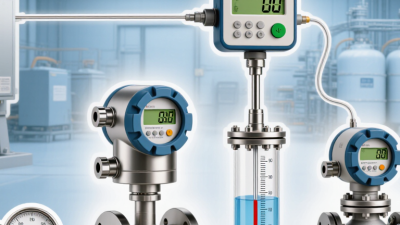
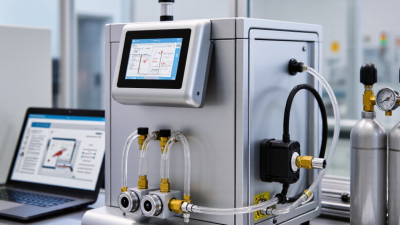
Let’s be honest—smart densimeters can be a real game-changer when you need to keep an eye on gas composition, density, and overall process stability. Whether it’s out in the field on a pipeline, in a lab, or across an industrial plant, they give operators a much clearer picture. That said, a reliable smart gas density monitor only earns its keep if it's set up right. Calibration, installation, and the specific application all play a part in whether it actually improves process control. And here's the thing: the little stuff matters more than you'd think. Sensor response time, operating range, even communication options—these can make or break your day-to-day operations.
Before diving into manufacturers, it helps to get a sense of the broader market. According to the International Energy Agency’s Gas Market Report from Q1 2025, global natural gas demand grew by around 2.8% in 2024. That kind of growth makes accurate measurement across production and distribution systems more important than ever. So if you’re a buyer comparing Chinese suppliers, this guide is meant to give you a practical look at product capabilities, technical documentation, calibration support, and the kind of service you can actually expect. You know, ISO 6976 is one of those standards people actually rely on when they need to calculate gas properties from composition. It gives buyers a solid way to sanity-check whether what a supplier claims really lines up with their own measurement needs. And honestly—this might sound obvious—specs deserve a close read.
Look, the companies listed here are just candidates—don’t treat this as some automatic ranking of quality. If you’re planning to buy, make sure to check measurement ranges, stated accuracy, certificates, and after-sales support directly with each supplier. Ask for test records. And yeah, read the fine print. Sure, you’ll run across terms like “Smart Wti” when you’re digging through product research — but don’t let those phrases make the call for you. Technical specs are what really matter. And look, no shortlist is ever perfect. Some of what’s out there might be incomplete or a little out of date, and that’s worth paying attention to. So take your time, compare the evidence carefully, and only then pick a supplier.
What a Smart Densimeter Measures and How It Works
A smart densimeter measures the density of a liquid or, in some designs, a gas. Density is mass per unit volume, often reported in kilograms per cubic metre or grams per millilitre. It is not automatically the same as concentration. A system may estimate concentration from density, but only when a suitable calibration or reference table is available.
Many instruments use a vibrating tube. A sample flows through the tube, and its vibration changes with the sample’s density. The sensor detects that change and converts it into a reading. Temperature matters: a liquid can expand as it warms, changing its measured density. Smart models may use a built-in temperature sensor to compensate and can display, store, or transmit readings. Features vary.
Small shifts count. In a plant, an operator might compare readings from a warm process line with a laboratory sample taken nearby. Bubbles, residue, or uneven flow can distort results, even when the display looks precise. A stable reading is not proof of a representative sample. Cleaning the measurement cell and checking calibration against a suitable reference help keep results dependable. I’d still question a sudden change before treating it as a real process shift.
Reference Densities of Common Liquids at About 20°C
Illustrative reference values—not manufacturer or product-performance data.
A smart vibrating-tube densimeter determines density from the tube’s oscillation period and a calibration. Typical reference densities are shown in g/cm³; actual values vary with temperature and composition, especially for seawater and honey.
Key Technologies Used in Modern Smart Densimeters
Modern smart densimeters combine a vibrating U-tube, precision temperature sensing, and digital signal processing. A sample changes the tube’s resonant frequency; the instrument converts that shift into density. Temperature matters because even a small change can distort readings. Compensation algorithms correct for it, while stored calibration curves help maintain consistency across operating ranges. Short response times are useful. So is traceable calibration.
ASTM D4052 precision data report repeatability near 0.0001 g/mL and reproducibility near 0.0005 g/mL for applicable materials. These figures describe a test method, not a universal guarantee for every process instrument. Buyers should check sample type, temperature range, installation vibration, and calibration interval. In a Smart Oti workflow, readings should travel with temperature, timestamp, and calibration status. Diagnostics can flag drift or unstable resonance before operators trust a questionable value. Yet no sensor is magic. Fouling, bubbles, or poor sampling can still bias results, and software cannot repair a bad sample.
How China’s Smart Densimeter Industry Is Organized
China’s smart densimeter industry is organized around several connected roles, rather than one uniform manufacturing model. Some factories focus on sensing elements and electronic modules. Others assemble complete instruments, add displays, and develop software for process monitoring. This division lets buyers compare devices by measurement range, materials, connectivity, and service needs. The supply chain can be practical, but it is not always easy to read.
Manufacturers may work with component suppliers, calibration providers, and system integrators. These partners help adapt an instrument to a tank, pipeline, or production line. A Smart Manometer may appear in the same purchasing discussion, but it measures pressure, not density; buyers should confirm the required measurement principle. Ask for specifications, calibration records, installation guidance, and support arrangements. Small details matter. A sensor that performs well in a test setup may need different fittings or temperature compensation on site. Product descriptions alone rarely tell the whole story.
Tips: Share the fluid type, operating temperature, and installation conditions before requesting a quotation. Compare stated accuracy and response time on the same basis. If a specification is unclear, ask for clarification in writing. That extra check is worth it. Industry categories can overlap, so verify who builds, tests, and supports each instrument.
Profiles of 10 Chinese Smart Densimeter Manufacturers
China’s smart densimeter manufacturers serve laboratories, production lines, and field teams that need reliable density readings. Their product ranges may include benchtop instruments, inline sensors, and portable meters. The right choice depends on the sample, measurement range, and working environment—not just a specification sheet.
These ten manufacturer profiles are best read as practical comparison points. Check whether each supplier explains calibration procedures, temperature compensation, measurement uncertainty, and maintenance needs. Ask for application-specific test data, especially when samples are viscous, corrosive, or prone to bubbles. Clear manuals matter. So does responsive technical support.
A factory-floor user may value a rugged sensor with straightforward installation. A laboratory may need finer resolution and traceable calibration records. Some suppliers emphasize customization; others focus on standard models and delivery consistency. Verify these details directly, since public product descriptions can leave gaps.
One thing is easy to overlook: cleaning time affects daily use. It deserves more attention than it often gets.
The profiles can help narrow the field, but a sample test is still worth arranging before purchase.
How to Compare Manufacturers and Product Specifications
When comparing smart densimeter manufacturers in China, start with the measurement principle and intended sample, not the touchscreen. Oscillating U-tube instruments suit many clean liquids, but bubbles, viscous samples, and temperature shifts can affect results. Ask for the measuring range, accuracy, repeatability, resolution, temperature stability, and minimum sample volume. Small differences matter. A display resolution of 0.0001 g/cm³ does not mean the instrument is accurate to that level.
Use recognized methods to assess claims. ASTM D4052-22 reports repeatability of about 0.0001 g/cm³ and reproducibility of about 0.0002 g/cm³ for applicable petroleum samples. These are method precision figures, not a guarantee for every model or liquid. Request test reports showing the sample type, temperature, reference method, and number of replicates. Then compare results with your own operating conditions. Check the fine print.
Also examine calibration and service details. Confirm whether calibration is traceable to recognized standards, how often verification is recommended, and whether the supplier provides uncertainty information. For a plant receiving samples in warm, dusty conditions, probe durability and cleaning time may matter more than extra software features. I would still ask for raw calibration records; polished brochures are not evidence. Manufacturers’ specifications can omit difficult sample conditions, so independent testing may be worth the extra time.
Common Applications Across Industrial Sectors
Smart densimeters serve very different jobs across industrial sectors. In mineral processing, operators track slurry density in pipes and flotation feeds, adjusting water addition before solids settle or pumps strain. The USGS Mineral Commodity Summaries 2024 estimated global copper mine production at about 22 million metric tons in 2023, illustrating the scale of material flows these plants manage. Small shifts matter. Density readings help, but they cannot replace sampling or process knowledge.
In chemical plants, inline measurements can flag changes in concentration during blending and transfer. Food and beverage facilities use density to check mixes such as syrups, while wastewater plants monitor solids in sludge lines. Steelmakers can measure process liquids, including pickling solutions and cooling fluids; the World Steel Association’s World Steel in Figures 2024 reports 1,892.2 million tonnes of crude steel production in 2023. Smart Monitoring can make these readings visible to control-room teams in real time. Yet one reading is not the whole story: bubbles, temperature changes, and deposits on a sensor can distort results. Calibration still takes care.
Emerging Trends in Smart Density Measurement
Smart density measurement is moving beyond isolated readings toward continuous, connected monitoring.
New instruments combine density sensors with temperature and pressure inputs. This helps operators distinguish real process changes from normal operating variation. A Gas Density Monitor can flag a drift while readings are still within routine inspection ranges. Small details matter.
Edge processing is another growing trend.
Devices can filter noisy signals locally and send selected data to control systems, reducing delays and unnecessary network traffic. Digital calibration records also make it easier to compare readings across shifts or maintenance events. In a production line, a technician might review a density trend beside temperature changes rather than treating one number as the whole story. The result is more useful context, not automatic certainty.
Predictive maintenance features are becoming more common,
but they depend on clean installation and well-chosen alarm limits. A sensor mounted near vibration or heat may produce confusing data. More connectivity does not guarantee better decisions. Not always. Teams still need to verify readings against reference checks and understand how the process behaves. One weakness remains: sensor data can look precise even when calibration or sampling conditions are poor. That deserves more attention as smart measurement expands.
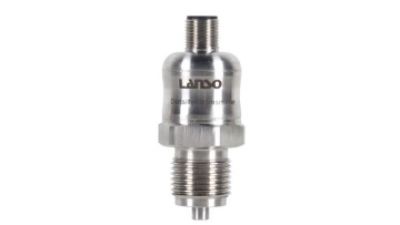
China DT10 Density Transmitter Suppliers: Reliable SF₆ Gas Monitoring for Substations
DT10 density transmitters provide continuous monitoring of SF₆ gas density in sealed equipment tanks, helping substation operators identify changes that may require attention. By delivering dependable density information, they support routine equipment supervision and help maintain the safe, stable operation of gas-insulated switchgear and other SF₆-filled assets.
Manufactured in China, DT10 transmitters are suitable for both newly built substations and projects to renovate or upgrade existing facilities. Their application across different installation scenarios gives buyers flexibility when selecting monitoring equipment for current needs or planned improvements. Reliable suppliers can also provide product information and support to help customers choose an appropriate solution for their systems.
As a trusted factory, we focus on consistent quality and ongoing product development. Careful manufacturing and attention to performance help ensure that each transmitter is ready for demanding substation environments. With dependable SF₆ density monitoring, DT10 transmitters contribute to clearer equipment oversight and more informed maintenance planning.
Conclusion
This article explains what a smart densimeter measures and how it converts sensor readings into reliable density data, while introducing the core technologies behind modern instruments, including digital sensing, signal processing, temperature compensation, and connected monitoring. It also outlines how China’s smart densimeter industry is organized and presents an overview of ten domestic manufacturers without focusing on brand names.
Readers will find practical guidance for comparing manufacturers and product specifications, such as measurement range, accuracy, response time, operating conditions, and communication options. The article also surveys applications across industrial sectors and considers emerging trends in automation, remote diagnostics, data integration, and smarter process control. A Smart Gas Density Monitor is discussed as one example of how connected density measurement can support consistent monitoring and informed operational decisions.

 SF6 Gas Density Monitor
 SF6 gas density transmitter
 SF6 gas valve
 SF6 Gas Detection Analyzer Series
 Leakage Current Monitoring Series
 Transformer Accessories Series
 +86-400-820-1296
 CONTACT NUMBER