SF6 Gas Density Monitor
 SF6 gas density transmitter
 SF6 gas valve
 SF6 Gas Detection Analyzer Series
 Leakage Current Monitoring Series
 Transformer Accessories Series
 +86-400-820-1296
Leave Your Message
-
CONTACT NUMBER
-
 CONTACT NUMBER
Picking the right smart densimeter? It can make density testing faster, clearer, and a lot more dependable. You get precise measurement, yes, but also temperature control, automated calculations, and digital tracking of results. And those features really matter when even a small error can throw off formulation, filling, or quality decisions.
Paul Stabinger, one of the pioneers behind oscillating U-tube technology, once said, 'Density is a fingerprint of a substance.' That says a lot about why density deserves careful attention. A modern Density Sensor can pick up subtle changes in liquids, but accuracy still comes down to proper sampling. You need a clean, bubble-free sample. And stable temperature, too.
In a busy lab, a smart densimeter can walk the operator through the measurement steps. It might flag unstable readings, store calibration records, and cut down on manual transcription. Say a technician is testing syrup—they can watch the displayed temperature, wait for stability, then review the result right away. Manufacturers like Anton Paar have helped push this instrument category forward with automated density measurement systems.
That said, smart doesn't mean infallible. Viscous samples may need extra time. Poor cleaning can leave residue inside the measuring cell. And even experienced analysts can miss small bubbles. Annoying? Yes. Worth paying attention to? Definitely.
A reliable workflow mixes instrument intelligence with trained judgment. Users should check calibration with suitable reference materials and routinely document maintenance. Results become more trustworthy when measurement conditions stay consistent. The best densimeter isn't just the most automated model. It's the system that supports accurate decisions, exposes uncertainty, and actually fits the lab's real working habits.
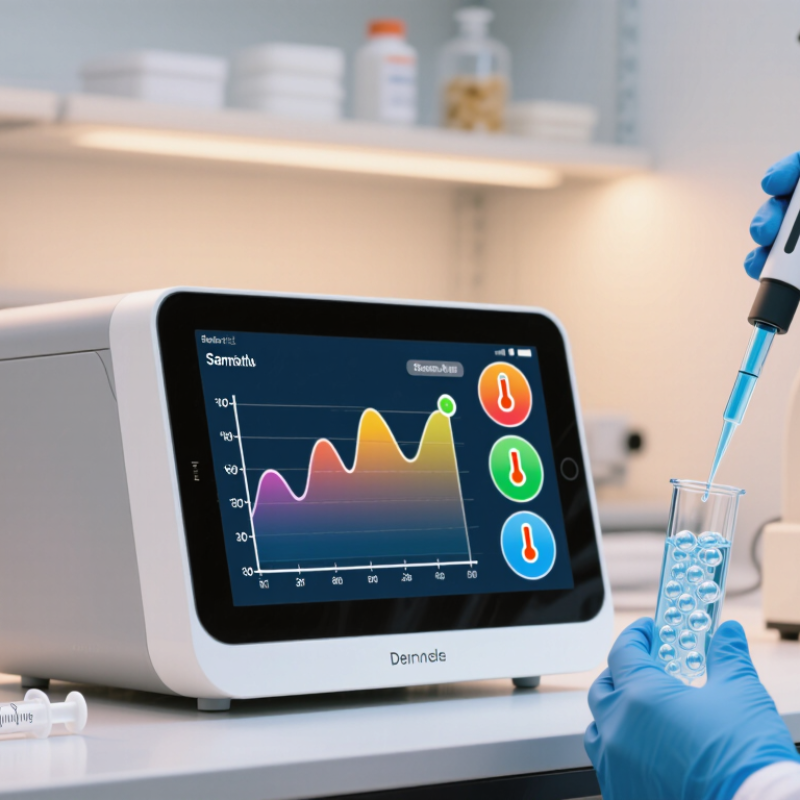
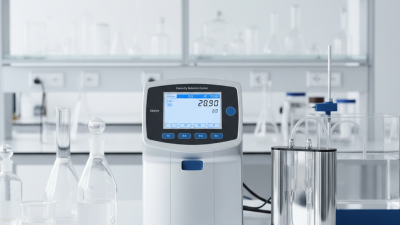
A smart densimeter is a digital instrument that measures liquid density with controlled precision. It shows how tightly matter is packed inside a sample. Unlike a traditional glass hydrometer, it can reduce manual reading errors. Many models combine an oscillating tube, temperature compensation, and electronic data storage. In fuel testing, a Fuel Density Sensor can help monitor density changes between batches. The result appears on a screen within seconds. That is the basic idea.
A smart densimeter also supports more consistent laboratory work. The operator injects a small sample into the measuring cell. The instrument then detects density and adjusts the result for temperature. This matters because even a small temperature shift can change the reading. In practice, clean sampling is essential. Small bubbles can distort the measurement. The result may drift. This is easy to miss.
Reliable testing still requires trained judgment. Users should verify calibration with suitable reference standards before important measurements. They should also rinse and dry the cell after each sample. A dirty cell can create believable but inaccurate results. Smart does not mean automatic perfection. I have seen testing routines become too dependent on digital readings. That habit needs reflection. Experienced technicians compare unusual results with sample temperature, handling records, and previous data. A clear digital value is useful, but its meaning depends on careful practice.
| Testing Dimension | Typical Smart Densimeter Capability | Why It Supports Accurate Testing |
|---|---|---|
| Measurement principle | Oscillating U-tube measurement | Measures density from the oscillation behavior of a temperature-controlled measuring cell, reducing dependence on visual reading. |
| Density range | Common laboratory range: approximately 0.0000–3.0000 g/cm³ | Covers many liquids, including water-based samples, solvents, oils, and concentrated solutions. |
| Repeatability | Often around ±0.0001 g/cm³ under controlled conditions | Consistent repeated readings help identify sample variation and reduce operator-to-operator differences. |
| Accuracy | Common laboratory performance: approximately ±0.001 g/cm³; exact performance depends on the model and method | Provides a defined measurement uncertainty for quality control, formulation, and process monitoring. |
| Temperature control | Automatic control or compensation, commonly near 15–40°C depending on the instrument | Density changes with temperature, so controlled measurement conditions improve comparability between results. |
| Measurement time | Typically less than 1–3 minutes after sample introduction and stabilization | Faster testing supports more frequent in-process checks and reduces laboratory waiting time. |
| Sample volume | Often approximately 1–2 mL for laboratory cells; verify the instrument specification | Low sample consumption is useful when samples are expensive, limited, or collected from small process lines. |
| Calibration | Water and air calibration, with guided software workflows on many systems | Routine calibration helps compensate for cell condition and environmental changes before testing. |
| Data handling | Digital display, result storage, and possible USB, network, or laboratory software export | Electronic records reduce transcription errors and make results easier to trace and review. |
| Automatic corrections | Temperature correction and selectable concentration or specific-gravity calculations may be available | Automated calculations minimize manual conversion mistakes and provide results in the required reporting unit. |
| Applicable methods | Can support methods based on ASTM D4052 and ISO 12185 when the instrument and procedure are suitable | Recognized methods provide a consistent framework for sample preparation, measurement, and reporting. |
| Best suited for | Quality control, research laboratories, production monitoring, beverages, chemicals, fuels, and pharmaceutical liquids | A broad application range makes one digital platform useful for routine testing and process decisions. |
Note: Performance values are representative ranges for smart laboratory densimeters. Actual accuracy, repeatability, temperature range, sample volume, and method compliance depend on the specific instrument, sample properties, calibration, and operating procedure.
## ZMJ60XDR Density Monitor: Features, Applications, and Selection Guide
Reliable gas-density supervision is essential for sealed high-voltage equipment using SF₆ insulation and interruption technology. The ZMJ60XDR Density Monitor measures SF₆ density in sealed tanks, displays the operating condition, and provides signal outputs when density reaches preset alarm or lockout levels. This supports early detection of leakage or abnormal pressure-temperature conditions, helping operators protect insulation performance and maintain equipment availability. Its function is particularly relevant because the IPCC Sixth Assessment Report assigns SF₆ a 100-year global warming potential of approximately 25,200 times that of CO₂, making effective containment and monitoring an important operational priority.
Designed for high-voltage systems, the monitor can also transmit real-time density information for centralized or remote supervision. This capability supports online condition monitoring, faster maintenance decisions, and improved visibility across substations. Its applications include gas-insulated switchgear, circuit breakers, enclosed bus systems, and other sealed SF₆ chambers used in transmission and distribution networks. The approach is consistent with the monitoring and maintenance principles associated with IEC 62271-203 for gas-insulated metal-enclosed switchgear and related high-voltage equipment.
When selecting a density monitor, users should evaluate the equipment’s rated voltage, gas-compartment configuration, temperature-compensation requirements, alarm set points, output interfaces, installation space, and communication architecture. The ZMJ60XDR can support both new-substation projects and modernization programs, offering a practical option for replacing basic local indicators or adding remote monitoring to existing assets.
A smart densimeter is a digital instrument that measures liquid density with controlled precision. It often uses an oscillating tube, temperature compensation, and electronic storage. Results may appear within seconds. That is the basic idea.
An operator injects a small liquid sample into the measuring cell. The instrument detects density and adjusts the result for temperature. Small bubbles can distort readings. Clean filling matters.
Liquid density can change when temperature shifts slightly. Temperature compensation helps produce more stable readings. The screen may show density, temperature, and measurement stability together.
It supports faster testing and easier comparison between repeated measurements. Digital records can include results, calibration checks, and operator information. This reduces manual transcription mistakes. Small details matter.
No. It cannot correct a dirty cell, trapped air, poor sampling, or incorrect calibration. Smart does not mean automatic perfection. That assumption is risky.
Operators should use clean equipment and avoid introducing air during filling. Viscous liquids need extra care because hidden bubbles may remain. Rinse and dry the cell after each sample.
Calibration intervals should reflect sample type, testing frequency, and laboratory risk. Users should verify performance with suitable reference standards before important measurements. A convenient schedule may be wrong.
Yes. Operators can check incoming materials near production areas before processing continues. They can compare results with approved specifications. Vibration and temperature may affect field readings, so verification remains wise.
Do not accept every automated value without inspection. Compare the result with sample temperature, handling records, cleaning steps, and previous data. Sometimes the procedure is the real problem.
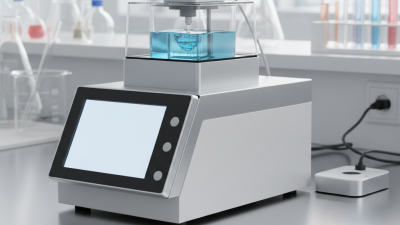
A smart densimeter is an advanced instrument designed to determine the density of liquids and other materials quickly, consistently, and with minimal manual effort. Using a precision Density Sensor, it analyzes how a sample behaves within a controlled measuring system and converts the results into accurate density values. Intelligent software can automatically manage temperature compensation, detect unstable readings, identify possible measurement errors, and store test data for later review. These capabilities make density testing more reliable than traditional methods that depend heavily on operator experience.
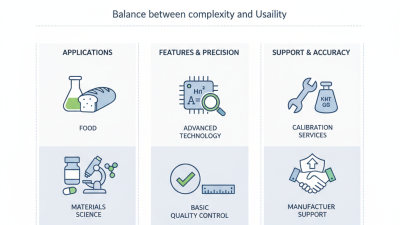
Smart densimeters improve laboratory and industrial testing by reducing preparation time, limiting sample waste, and supporting repeatable quality control. They can be useful in research, manufacturing, food processing, chemical analysis, and many other applications where dependable measurements are essential. When choosing a suitable model, users should consider measurement range, accuracy, temperature control, sample volume, cleaning requirements, data connectivity, ease of operation, and compatibility with their workflow. The right instrument can increase productivity while providing clear, traceable, and consistent testing results.