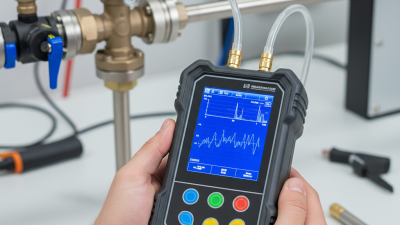
The Smart Densimeter is really changing the game in the Industrial Instrument world. You're looking at accuracy improvements of up to 20%, which is pretty impressive. It’s being used across a bunch of industries—think manufacturing, construction, and more. I recently read a report from Global Industry Analysts that predicts the demand for advanced density measurement tools is going to grow a lot in the coming years.
Dr. James McKinley, who’s a top expert in industrial instrumentation, shared some interesting thoughts. He said, “Precision in measurement is the backbone of quality control,” which really hits the mark. These smart densimeters don’t just boost productivity—they also help cut down on errors, especially in processes where getting the density right really matters.
Of course, it’s not all smooth sailing. The costs for rolling out this tech can be pretty steep, and it’s crucial to train staff properly so they know how to use these systems without any hassle. We’ve gotta find that sweet spot between making a solid investment and actually seeing the results. The industry’s got to tackle some of these hurdles, but overall, moving towards digital density measurement seems like a smart move for the future.

What is a Smart Densimeter and Its Purpose in Modern Industries?
In modern industries, a Smart Densimeter serves crucial roles in ensuring precision and efficiency. By measuring material density, it provides essential data for sectors like food production and pharmaceuticals. According to a recent industry report, over 70% of manufacturers have identified accurate density measurement as vital for quality control.
The Smart Densimeter uses advanced technology to track real-time changes in material properties. It's equipped with sensors that can detect even minute fluctuations, ensuring consistent product quality. For instance, in beverage production, a density variation of just 0.1 g/cm³ can indicate significant changes in ingredients. This instrument not only fosters compliance with industry standards but also reduces waste and saves costs.
However, while these instruments are designed for accuracy, they are not infallible. Calibration can drift and occasional software glitches may occur. Thus, relying solely on technology can lead to oversights. In many facilities, integrating a Manometer Instrument alongside the Smart Densimeter can help cross-verify data. This dual approach enhances reliability, ensuring that businesses maintain high standards in an increasingly competitive environment.
Key Components and Technologies Used in Smart Densimeter Designs
A smart densimeter is an advanced device used to measure the density of various substances. Several key components contribute to its functionality. At its core, a smart densimeter often utilizes high-precision sensors that detect changes in pressure or mass. This technology allows for accurate readings, providing data that is crucial in many industries.
Another vital aspect is the integration of data processing capabilities. Modern smart densimeters often feature built-in software that analyzes the collected data in real time. This helps in generating insights and trends, aiding users in making informed decisions. The user interface is typically designed to be intuitive, allowing operators to access crucial information promptly.
However, the reliability of smart densimeters can be inconsistent. Factors such as temperature fluctuations or improper calibration may lead to erroneous results. Users must remain vigilant and regularly check the calibration of their devices. Investing in training for personnel operating these tools is essential. A lack of understanding can negate the benefits of the high-tech features present in these densimeters.
How Smart Densimeters Measure Density with Precision and Accuracy
Smart densimeters represent an advanced technology in the measuring of density. They utilize various principles such as oscillation frequency, buoyancy, or pressure differential to achieve precision. Reports from industry experts indicate that these devices can reach an accuracy of ±0.01 g/cm³, a significant improvement over traditional methods. The transition towards smart densimeters is largely fueled by the demand for more reliable data in sectors such as pharmaceuticals and chemical manufacturing.
The way smart densimeters function allows for real-time measurement and data logging. Modern models integrate sensors with digital interfaces, enabling easy access to results. Users can expect a response time of just a few seconds. This efficiency not only speeds up processes but also minimizes error margins. However, even sophisticated systems can encounter pitfalls. Calibration remains essential, as environmental factors like temperature and pressure can skew readings.
Recent studies show that a large percentage of errors in density measurements stem from improper device handling. Training users on effective operation is crucial. Without thorough understanding, even the best technology may produce unreliable results. Addressing this gap is key to ensuring that industries can fully harness the capabilities provided by smart densimeters.
Data Analysis and Interpretation: The Role of Smart Densimeters
Smart densimeters play a vital role in data analysis and interpretation. They measure the density of various liquids and materials with precision. This data is crucial in industries like construction, chemical processing, and food production. However, interpreting density readings requires expertise.
A smart densimeter can collect vast amounts of data quickly. Users must understand how to analyze this data effectively. Accurate interpretations can lead to better decision-making. For example, a slight change in density could indicate a problem with a material. Identifying such changes is essential for maintaining quality.
Tips for effective analysis include regularly calibrating your densimeter. Regular calibration ensures accuracy. Familiarity with the densimeter's specifications is also necessary. Knowing its limitations can prevent misinterpretations. Consider trends in density over time rather than isolated readings. This approach helps spot potential issues earlier. Remember, constant learning and adapting are key in using these devices effectively.
Smart Densimeter Data Analysis
This bar chart illustrates the density measurement data collected by a smart densimeter over a week. The measurements are shown in grams per cubic centimeter (g/cm³), indicating the variations in material density during the observational period.
Applications of Smart Densimeters in Various Industries
Smart densimeters play a vital role in various industries by accurately measuring the density of liquids and solids. In the oil and gas sector, for instance, these Analytical Instruments help optimize production processes. According to the International Energy Agency (IEA), precise density measurements can lead to a 5% increase in extraction efficiency. This efficiency is crucial in maximizing resource utilization while minimizing waste.
In the food and beverage industry, smart densimeters ensure product quality and consistency. Accurate density measurement can help in determining sugar content in beverages. A report from the Food Safety Authority emphasized that a deviation of just 1% in density can indicate potential spoilage. Such precise control can prevent losses and maintain consumer trust.
Tips: When choosing an analytical instrument, consider the environment where it will be used. Ensure that the device can handle specific conditions like temperature and pressure. Regular calibration of densimeters is essential for reliable readings. Small inaccuracies may lead to significant consequences over time. Prioritize testing in real conditions to evaluate performance accurately.
What is a Smart Densimeter and How Does it Work? - Applications of Smart Densimeters in Various Industries
| Industry |
Application |
Benefits |
Measurement Range |
Typical Accuracy |
| Food and Beverage |
Density measurement of liquids |
Improved quality control |
0.001g/cm³ - 1.200g/cm³ |
±0.002g/cm³ |
| Pharmaceutical |
Quality assurance of drug formulations |
Consistency in dosage |
0.001g/cm³ - 1.300g/cm³ |
±0.001g/cm³ |
| Chemical |
Density monitoring of chemical solutions |
Process optimization |
0.0005g/cm³ - 2.500g/cm³ |
±0.005g/cm³ |
| Oil and Gas |
Well monitoring and fluid density measurement |
Improved extraction efficiency |
0.500g/cm³ - 3.000g/cm³ |
±0.01g/cm³ |
| Environmental |
Water density analysis for pollution monitoring |
Real-time environmental tracking |
0.001g/cm³ - 1.500g/cm³ |
±0.002g/cm³ |
Industry Standards and Calibration Procedures for Smart Densimeters
Smart densimeters are essential tools in various industries, measuring the density of fluids and solids accurately. To ensure reliable results, it’s crucial to follow industry standards and calibration procedures. Calibration helps maintain the precision of measurements, which can be affected by environmental factors or user errors. Regular calibration is not just good practice; it’s often required to comply with regulatory standards.
During calibration, technicians use known reference materials to adjust the smart densimeter. These materials have precise densities, allowing for accurate comparisons. The procedure involves checking the instrument against these standards and making necessary adjustments. Training personnel to understand these processes is vital. A lack of understanding might lead to incorrect readings, affecting product quality or safety.
Calibration intervals depend on the application and usage frequency of the
Monitoring Instrument. Some industries may require daily checks, while others might suffice with monthly validation. Documenting calibration dates and results is a common requirement for quality assurance. This process helps maintain credibility and trust in the measurements obtained. However, ignoring these steps can lead to significant inaccuracies and costly errors. Regular reviews and updates to calibration practices ensure ongoing compliance and performance.
Future Trends and Innovations in Smart Densimeter Technology
The trend towards smart densimeters is rapidly reshaping various industries. These devices utilize advanced technology to measure density with remarkable accuracy. New features include wireless data transmission and integration with smart systems. However, more research is needed to ensure standardization across different models.
Future innovations in smart densimeter technology will likely focus on AI and machine learning. Enhanced algorithms may improve density measurements in complex environments. As the demand for precise data grows, Calibration Instruments will play a crucial role. They must evolve to maintain accuracy while adapting to emerging technologies.
Challenges remain in the widespread adoption of these devices. Calibration processes can be time-consuming, impacting productivity. Users might face hurdles in training and adapting to new functionalities. Addressing these concerns is essential for maximizing the benefits of smart densimeters. There is much room for improvement, and ongoing advancements will be crucial for the industry.
Comprehensive Guide to the China VDA-03 Gas Density Monitor Calibrator: Features, Benefits, and Trusted Suppliers
The VDA-03 Gas Density Monitor Calibrator represents the cutting-edge of calibration technology for Gas Density Monitors (GDM), specifically tailored for use with SF6, SF6/N2 hybrid, and SF6/CF4 hybrid gases. This fully automated instrument is designed to streamline the testing and calibration processes, offering two distinct operational modes: zero-pressure mode and working pressure mode. In working pressure calibration mode, users can effortlessly evaluate the accuracy of the monitor from the rated filling pressure down to zero, ensuring precision across varying pressure levels. Conversely, the zero-pressure mode facilitates calibration starting from zero, progressing to the rated pressure, thus allowing comprehensive performance assessments.
As a portable solution, the VDA-03 is ideal for on-site operations, providing technicians and factory personnel with a reliable tool for testing, calibration, and maintenance of electrical products. Its innovative design not only enhances efficiency but also reinforces the importance of accuracy in monitoring gas densities, which is crucial for safe and effective electrical operations. This advanced calibrator is a product of collaboration among leading manufacturers, reflecting a commitment to excellence and reliability in industrial applications, ultimately serving as a key asset for various operational needs.
FAQS
: Smart densimeters measure the density of liquids and solids with precision.
It can lead to a 5% increase in extraction efficiency by optimizing production processes.
Regular calibration ensures accuracy and prevents misinterpretations in density readings.
It could indicate a problem with a material, which is crucial for quality maintenance.
Users should consider trends over time rather than isolated readings for better insights.
Calibration can be time-consuming, and users may struggle to adapt to new technologies.
Future devices may include wireless data transmission and advanced AI algorithms.
Knowing the limits prevents misinterpretations and enhances the reliability of results.
Constant learning helps users adapt to evolving technologies and improve analysis accuracy.
In the food and beverage industry, it can signal potential spoilage and affect product quality.
Conclusion
A smart densimeter is an advanced industrial instrument designed to accurately measure the density of various materials in modern industries. Its primary purpose lies in enhancing efficiency and precision in processes such as quality control, formulation, and inventory management. The key components of smart densimeter technology include high-precision sensors, data processing units, and communication interfaces that enable real-time monitoring. These instruments utilize innovative measurement techniques to ensure accurate density readings, which are crucial for maintaining product quality.
The data collected by smart densimeters plays a vital role in decision-making, as it can be analyzed and interpreted to optimize operations across different sectors, including chemicals, food, and pharmaceuticals. Furthermore, adherence to industry standards and calibration procedures ensures the reliability of these measurements, while ongoing innovations and future trends promise to enhance their capabilities further. Overall, smart densimeters represent a significant leap forward in the field of industrial instrumentation, driving improvements in productivity and accuracy.

 SF6 Gas Density Monitor
 SF6 gas density transmitter
 SF6 gas valve
 SF6 Gas Detection Analyzer Series
 Leakage Current Monitoring Series
 Transformer Accessories Series
 +86-400-820-1296
 CONTACT NUMBER