So, you're on the hunt for a smart densimeter in China, right? Before you even flip through any product brochures, step back and think about what you're actually measuring. A lab might be just fine with a compact benchtop model, but if you're running a production line, you'll probably want an inline sensor that can keep up with continuous flow. And here's the thing – you've got to know your sample. Bubbles, temperature swings, suspended particles – these can trip up certain measurement methods, big time. Once you've got that sorted, then you can start comparing specs: range, accuracy, repeatability, response time, and how well it compensates for temperature. Honestly? It's the little details that matter. They really do.
Honestly, a good supplier will walk you through how they tested their stuff—like, they'll give you clear specs, calibration info, and instructions. And don't just take their word for it. Ask them to demo with a sample that's similar to what you'd use, and see if the results stay consistent when they run it multiple times. That's the real test. Look, when you're picking a measurement instrument, it's got to fit how you actually work. Think about stuff like cleaning time, how easy it is to export data, whether the display is readable in your lighting, and if it plays nice with your existing systems. And here's the thing: a glossy screen doesn't mean it's accurate, and neither does a long list of features. Before you shell out your hard-earned cash, check what service availability is like, if spare parts are easy to get, what training they offer, and how they handle measurement issues when they pop up. You'll thank yourself later. Look, I get that these points aren't as flashy as some fancy software, but they're what actually matter day in and day out. Honestly, there's no single model that's perfect for every material or every facility. So when you're picking, you've got to compare what's documented against what you really need—that gives you a solid, defensible choice, even if one spec catches your eye.

What Is a Smart Densimeter and How Does It Work?
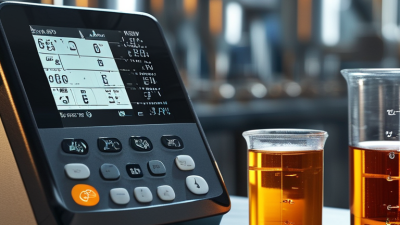
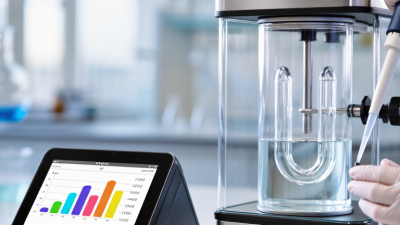
A smart densimeter is a Density Measurement Instrument that calculates mass per unit volume and displays the result digitally. Many models use an oscillating U-tube: a small liquid sample enters a vibrating tube, and the instrument measures how the tube’s resonant frequency changes. Because density affects that vibration, the device converts the signal into a reading. A built-in temperature sensor helps correct for temperature changes, which can alter liquid volume and density. Small details matter.
For a practical check, NIST’s Chemistry WebBook lists water at about 0.9982 g/cm³ at 20°C. ASTM D4052-22 describes an oscillating U-tube method for measuring liquid density, including petroleum products. These references help users understand both a useful comparison value and a recognized test approach. In daily use, keep the sample cup clean, avoid air bubbles, and let the reading stabilize before recording it. A smart display cannot fix a contaminated sample. Nor does automatic temperature compensation remove every source of error; calibration, sample handling, and the instrument’s stated range still matter. Choosing a model means checking its resolution, temperature control, and suitability for the liquid being measured—not just its screen or connectivity.
China Best Smart Densimeter: How to Choose the Best One?
Compare a smart densimeter’s measurement range with the density of the liquids you need to test. The chart shows approximate reference densities at 20°C.
How it works: Many digital densimeters use an oscillating U-tube. The instrument measures the tube’s oscillation and uses it, along with temperature measurement, to calculate liquid density. Check the required range, temperature control, accuracy, and sample compatibility when choosing a model.
Reference values are approximate; actual density can vary with purity and temperature. Units: g/cm³.
Which Density Measurement Method Fits Your Application?
China Best Smart Densimeter: How to Choose the Best One?
Which density measurement method fits your application? For routine liquid testing, an oscillating U-tube densimeter needs only a small sample and gives quick readings. It suits clean, temperature-controlled liquids, but bubbles, residue, and changing viscosity can distort results. For continuous process monitoring, a Coriolis meter measures density in a flowing line. A hydrometer may be a simpler, lower-cost option when manual readings and slower checks are acceptable. Match the method to sample type, required precision, throughput, and cleaning needs—not just the instrument’s display.
For petroleum products, ASTM D4052 reports repeatability of about 0.0001 g/mL and reproducibility of about 0.0005 g/mL under its specified test conditions. These figures are useful benchmarks, not guarantees for every sample or instrument. Temperature control matters: even a small temperature shift can change a liquid’s density. A Manometer Instrument can help verify pressure conditions in a test setup, but it does not replace density calibration.
Bubbles matter. So does sample handling.
Tips: Check the instrument against a suitable reference liquid before testing. Record sample temperature, clean the measuring cell between samples, and inspect for trapped air. For viscous or particle-bearing samples, confirm the method is validated for that material; this step is easy to overlook.
What Technical Specifications Should You Compare?
A smart densimeter should match your sample and daily workload, not just offer the smallest displayed increment. Compare measuring range, accuracy, repeatability, temperature control, and sample volume. For liquids that change density with temperature, stable temperature control matters: a warm sample can produce a misleading reading. Check whether the instrument reports density, specific gravity, or both, and whether it handles viscous or volatile samples. A 0.0001 g/cm³ display step is not proof of 0.0001 g/cm³ accuracy.
For petroleum testing, ASTM D4052-22 gives useful performance context: its precision statement reports repeatability of 0.0001 g/cm³ and reproducibility of 0.0005 g/cm³ under specified conditions. Treat these as method benchmarks, not a guarantee for every sample or instrument. Ask for the manufacturer’s stated accuracy, operating temperature range, calibration procedure, and verification data. Also check how the device detects air bubbles; one tiny bubble can shift a result.
Tips: Compare sample volume and cleaning time using your actual workflow. Ask to test a representative sample, then repeat the measurement. Look at the spread, not only the best result. I would not choose on screen resolution alone; it is easy to overlook that detail.
Which Smart Features Improve Data Collection and Control?
A smart densimeter should make each reading easier to trace, not merely display a number. Look for timestamped results, sample identification, and automatic temperature compensation. These features help connect a density value to the sample, operator, and measurement conditions. A clear interface can flag unstable readings before they enter a report. Small details matter.
Connectivity can send results to a laboratory information system or controlled spreadsheet, reducing manual transcription. User permissions and change logs help teams see who adjusted settings and when. McKinsey Global Institute’s 2015 report, The Internet of Things: Mapping the Value Beyond the Hype, estimated that connected equipment could reduce maintenance costs by 10–40% and downtime by 50% in relevant industrial settings. These are potential industry-wide gains, not guaranteed results for a densimeter. An Analytical Instrument still needs documented calibration, suitable reference materials, and routine checks. Still, verify. Alerts are useful, but an operator should review unusual readings instead of trusting automation blindly. Calibration records and exportable raw data make that review more credible.
How Can You Assess Chinese Manufacturers and Product Quality?
To assess Chinese densimeter manufacturers, look beyond product photos and quoted prices. Ask how each unit measures density, handles temperature changes, and reports repeatability. A reliable supplier should explain its measurement method in clear terms. Small details matter. Request a sample test report and check that its model number matches the instrument being offered.
Review the manufacturer’s quality controls, not just its certificates. Ask how calibration is performed, whether calibration records can be traced to individual units, and how defects are handled. If possible, compare readings from a sample densimeter with a trusted reference liquid under controlled conditions. Note the temperature, sample volume, and measurement time. These details help reveal whether results are consistent in real use. A polished brochure is not proof; I would still verify the claims.
Tips: Ask for a live demonstration using a liquid similar to yours. Confirm the warranty, spare-part availability, and response time for technical support. Check the display, fittings, and cleaning steps for practical use. For an Industrial Instrument, request written specifications and a pre-shipment inspection option. If an answer is vague, pause and ask again. I might miss something on the first review, too.
How Should You Test and Select the Best Densimeter?
How Should You Test and Select the Best Densimeter?
A smart densimeter should be tested with the liquids you expect to measure, not only with water. Check the manual for suitable sample types and operating temperatures. Then measure a traceable reference liquid at a stable temperature, following the stated cleaning and filling procedure. Repeat the reading several times. Small differences matter. Compare both accuracy and repeatability; one good reading does not prove consistent performance.
Test practical details, too. Watch for air bubbles in the measurement cell, since they can distort results. Check how quickly readings stabilize and whether temperature compensation is available for your workflow. If the instrument stores or exports data, confirm that timestamps, units, and sample labels remain clear after transfer. A polished screen is useful, but it cannot replace sound measurement.
Before buying, try samples with different viscosities or compositions that reflect real use. Ask how calibration is checked, how often maintenance is needed, and what happens when a result falls outside the expected range. Do not guess. A feature-rich model may still be a poor fit if cleaning is slow or its measurement range misses your samples. Record test conditions and results; otherwise, a quick comparison can be misleading.
Conclusion
Choosing the best smart densimeter starts with understanding how it measures density and whether its operating principle suits your sample, workflow, and environment. Compare available measurement methods based on factors such as sample type, required accuracy, measurement range, temperature conditions, and testing speed. Review key specifications, including repeatability, resolution, calibration options, materials in contact with the sample, and maintenance needs, to ensure the Measurement Instrument can deliver reliable results in everyday use.
Smart features can make data collection and process control more efficient through automatic readings, digital records, communication options, and clear alerts. When evaluating Chinese manufacturers, assess documentation, calibration support, quality-control procedures, and the consistency of product performance rather than relying on claims alone. Before selecting a densimeter, test it with representative samples under real operating conditions, compare results with your requirements, and consider usability, service support, and total ownership costs.

 SF6 Gas Density Monitor
 SF6 gas density transmitter
 SF6 gas valve
 SF6 Gas Detection Analyzer Series
 Leakage Current Monitoring Series
 Transformer Accessories Series
 +86-400-820-1296
 CONTACT NUMBER