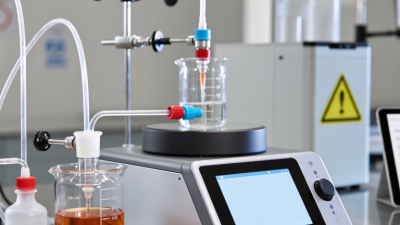
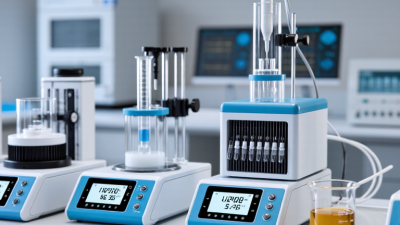
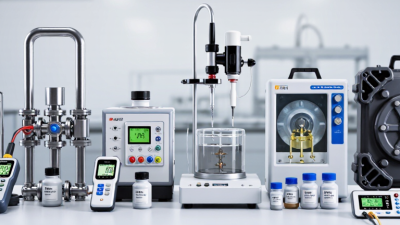
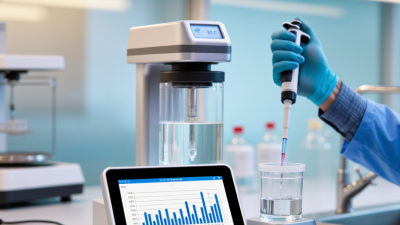
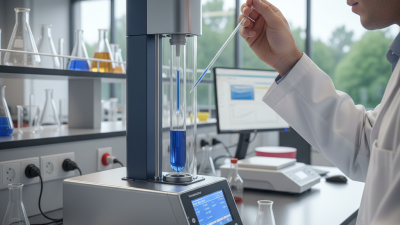
If you're trying to pick the best smart densimeter in 2026, honestly, the screen isn't the main event. What matters is that the readings are dependable. A Density Monitor can help you keep tabs on process changes, but only if the measurement quality is solid and it actually fits your application. Lord Kelvin, the physicist who basically lived and breathed measurement, said it well: 'When you can measure what you are speaking about, and express it in numbers, you know something about it.' That principle still holds today. But here's the thing: a clear number only gets you so far if you don't understand its limits.
If you really want to compare instruments fairly, don’t just glance at the specs—check things like stated accuracy, repeatability, temperature compensation, how it’s calibrated, and response time. And take a close look at the sample path, too. Narrow tubing, gunk buildup, or trapped bubbles? Yeah, those can mess with your readings. Here’s the thing: a gas density monitor isn’t necessarily a one-size-fits-all swap for a liquid densimeter. They can have totally different operating ranges, and installation isn’t always straightforward either. So when you’re comparing options, dig into how the device actually exports data, triggers alarms, and logs maintenance — those details matter. And don’t just settle for the shiny spec sheet; ask the manufacturer for documentation that’s specific to your application. It makes a big difference.
Look, the “best” model isn’t the flashiest—it’s the one that holds up reliably in real production. Bench tests can look great, but they don’t always translate to a warm, vibrating line, and that gap is worth paying attention to. When you’re comparing options, don’t just focus on measurement features; factor in service support, how easy it is to replace sensors, and the total operating costs. Then, once you’ve narrowed it down, test those devices against a trusted reference in actual operating conditions. And one more thing I’d double-check: even a smart instrument needs careful setup and regular reviews. Honestly, just taking that one practical step can make way more of a difference than adding yet another flashy feature to the screen.
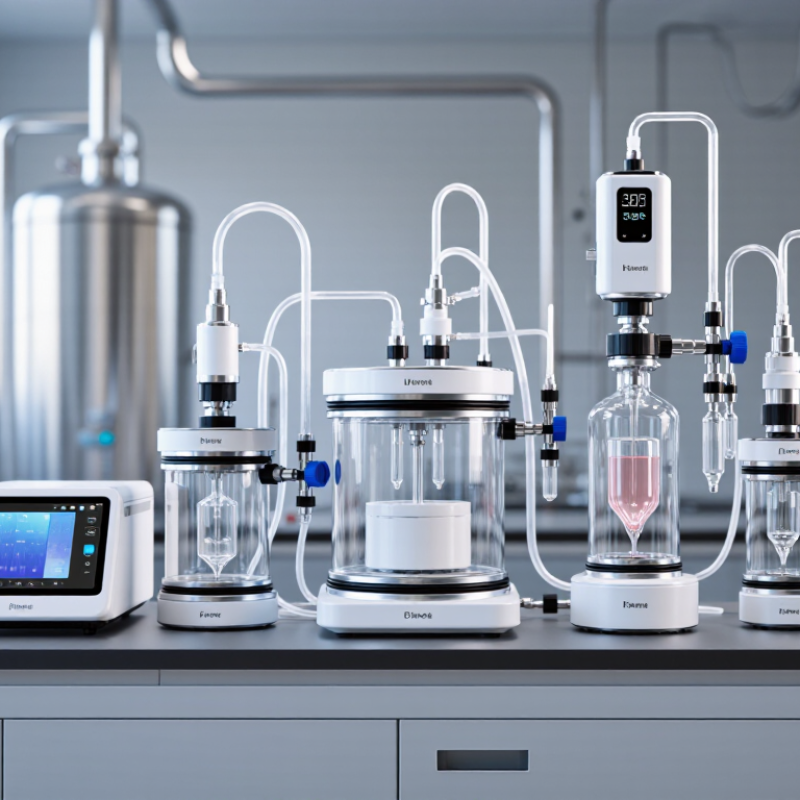
A smart densimeter measures density: mass per unit volume. Many models also report specific gravity and use temperature readings to compensate for expansion. This matters because a small density shift can indicate a change in concentration, mixing, or product consistency. In a beverage tank, for example, the reading can help operators track fermentation; in process liquids, it can flag a batch that needs checking. It does not identify every cause by itself.
Temperature is crucial. The International Association for the Properties of Water and Steam’s reference formulation places water’s maximum density near 999.975 kg/m³ at about 3.98°C. A reading without reliable temperature compensation may therefore mislead.
For petroleum liquids, ASTM D4052 describes digital density measurement using an oscillating U-tube. The method’s existence is not a guarantee of accuracy: calibration, sample handling, and bubbles still matter. I would not treat one clean screen reading as proof that a whole batch is uniform.
Tips: Keep the sample free of bubbles, allow it to reach the instrument’s specified temperature range, and check calibration with a suitable reference fluid. Compare readings over time, not just against a single target. Small shifts matter. But sensors drift, and real processes are rarely perfect.
A smart densimeter estimates gas density by combining pressure and temperature readings. In sealed electrical equipment, SF6 density matters because it helps indicate whether insulation conditions remain within the equipment’s specified range. The sensor does not simply treat pressure as density: its electronics compensate for temperature and convert measurements to a reference condition. That distinction is important. A cold morning can change pressure even when the amount of gas has not changed.
A useful Sf6 Density Monitor records time-stamped readings, compensated values, and alarm events. On a control-room screen, a slow downward trend may stand out more clearly than a single reading. Calibration checks compare the instrument with traceable pressure and temperature standards across its working range. Technicians should also review the sensor’s installation, wiring, and stated uncertainty. Small details matter. A neat graph can still mislead if the sensor has drifted or the calibration interval is overdue. Smart data supports inspection; it does not replace it. Some systems also make it awkward to export raw readings, which is worth checking before choosing one.
When comparing smart densimeters, start with measurement range, repeatability, temperature control, and uncertainty. A precise display is not proof of a reliable result. ASTM D4052 describes an oscillating U-tube method for petroleum liquids and reports precision under defined conditions. Compare instruments using equivalent conditions, including sample temperature and handling. Ask for repeatability data across your working range, not just a single water test. Small details matter.
Temperature compensation, automatic calibration checks, and clear error alerts can prevent avoidable rework. NIST reference data place pure water’s density near 0.9982 g/mL at 20°C, illustrating why temperature must be controlled and recorded. Check whether the instrument stores raw readings, calibration history, timestamps, and operator details. These records make results easier to review later. Connectivity is useful, but a polished dashboard can still hide weak measurement controls. I would treat vague accuracy claims cautiously; uncertainty depends on the method, sample, and conditions. A practical evaluation should include viscous samples, cleaning time, and repeat measurements. That takes effort. It may reveal that the most convenient device is not the most dependable one.
| Comparison Feature | Benchtop Oscillating U-Tube | Portable Oscillating U-Tube | Inline Process Density Sensor |
|---|---|---|---|
| Typical setting | Laboratory or quality-control bench | Field checks, receiving areas, or mobile testing | Pipelines, tanks, and continuous production lines |
| Measurement principle | Measures the oscillation of a sample-filled tube; density is calculated from its oscillation behavior. | Uses an oscillating sample tube in a handheld instrument; measurement depends on correct filling and handling. | A vibrating sensing element measures process-fluid density while installed in the line. |
| Sample or process access | A small liquid sample is introduced into the measuring cell. | A small sample is drawn into or introduced into the handheld cell. | Measures fluid in the process; installation and suitable wetted materials are essential. |
| Temperature control | Often offers controlled cell temperature; check the supported range and stability requirements. | May measure sample temperature or apply compensation; confirm how temperature affects the stated accuracy. | Measures process temperature or uses compensation, depending on the sensor and configuration. |
| Useful outputs | Density, temperature, and—where supported—calculated values such as specific gravity or concentration. | Density and temperature; some instruments also provide derived concentration values. | Continuous density and temperature signals; some systems calculate additional process variables. |
| Connectivity to check | USB, serial, Ethernet, or laboratory software support, depending on the instrument. | Wireless or wired transfer, data export, and compatibility with the required mobile devices. | Available analog or digital outputs and compatibility with the plant control or monitoring system. |
| Main strengths | Controlled measurement conditions and convenient repeat testing in a laboratory workflow. | Portability and quick checks without moving samples to a fixed laboratory bench. | Continuous measurement that can support process monitoring and automated control. |
| Key limitations to assess | Requires sample handling, cleaning, and routine calibration or verification. | Results can be affected by filling technique, bubbles, sample temperature, and field conditions. | Requires appropriate installation, process compatibility, and maintenance access; it is not a substitute for every laboratory method. |
| Best fit | Repeatable laboratory measurements, sample testing, and documented quality checks. | On-site verification where portability is more important than a fixed benchtop workflow. | Applications that need density readings continuously during production. |
| Selection checks | Compare the stated accuracy and repeatability at the temperature and density range you actually use; also check calibration traceability, sample compatibility, cleaning requirements, data export, and service support. Specifications vary by instrument and configuration. | ||
The best choice depends on whether measurements are made on the bench, in the field, or continuously in a process line. Compare published specifications under matching test conditions rather than relying on feature labels alone.
Smart densimeters serve different purposes, so the best choice depends on the material and the working environment. In food production, inline instruments can track liquid density as syrup moves through a pipe. Operators may use readings to check consistency between batches. A small temperature shift can affect the result, so temperature compensation and routine calibration matter.
Different demands apply in laboratories and chemical plants. A benchtop meter can support careful sample comparisons, while a process instrument must tolerate vibration, cleaning, and continuous operation. Some systems connect measurements to plant controls, making trends easier to review. Convenient, yes. But a digital display does not guarantee accurate data; setup and maintenance still count.
Gas applications need a different approach. An Sf6 Gas Density Monitor tracks gas density in enclosed electrical equipment, where temperature changes can make pressure readings harder to interpret. It is not interchangeable with a liquid densimeter. Buyers should check the measurement range, response time, output options, and service requirements against the actual installation. That sounds simple. It rarely is. I would also leave room for site-specific testing, because a neat specification sheet cannot capture every field condition.
Choosing the best smart densimeter in 2026 starts with checking how its accuracy is established. Compare the stated measurement range, resolution, and uncertainty, not just the number of decimal places. Ask whether readings are temperature-compensated and how often calibration is recommended. A useful check is to compare several readings with a traceable reference under stable conditions. They should agree consistently. One reading is not enough.
Usability matters during routine inspections. A clear display, readable status indicators, and simple data export can save time in a plant room. Check whether the device records timestamps, flags out-of-range values, and retains data during connection failures. An Sf6 Monitor workflow should make it easy to review density trends alongside service notes. Test it with gloves on, in the actual lighting, and with the network you expect to use. Small details can frustrate people.
Cost includes more than the purchase price. Add calibration, installation, software access, replacement parts, and staff training over the expected service life. Request a sample report before committing; confusing units or hidden fees deserve scrutiny. I would also ask how the instrument behaves near its measurement limits. Specifications rarely capture every awkward field condition. That deserves a closer look.
Choosing the best smart densimeter in 2026 starts with the measurement task, not the feature list. For SF6-insulated equipment, check that the device’s measurement range suits your operating conditions. Confirm how it handles temperature changes, since gas pressure can shift as temperatures rise or fall. A reliable reading matters more than a crowded dashboard. Small details count.
Next, compare accuracy, response time, alarm settings, and available data outputs. An Sf6 Gas Monitor may offer local readings, remote alerts, or both; choose what your maintenance team can actually use. Check calibration intervals and whether readings can be verified against a trusted reference. Ask how the device performs in vibration, humidity, and limited-access installations. A sleek screen is not enough. Review service requirements and replacement parts before purchase, too. There is a trade-off: extra connectivity can improve visibility, but it may add setup and maintenance work. No single model fits every site, so match specifications to your equipment, environment, and inspection routine.
SF6 density monitoring is essential to the safe and reliable operation of gas-insulated substation equipment. Because SF6 is a potent greenhouse gas, emissions data reported by international energy organizations highlights the importance of preventing leakage and improving maintenance practices. Density readings help operators identify changes in sealed tanks early, distinguish normal operating variation from possible gas loss, and plan inspections before equipment performance is affected. Consistent monitoring can also support more accurate records of gas use and maintenance activity.
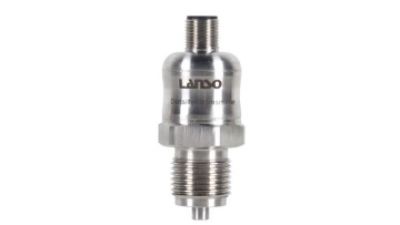
DT10 density transmitters provide a practical way to monitor SF6 in sealed tanks, with solutions suited to both newly built substations and upgrades to existing installations. By delivering continuous density information, they help maintenance teams respond promptly to abnormal conditions and make decisions based on current equipment status. As a China-based manufacturer and supplier of density-monitoring equipment, we focus on reliable, efficient products for varied substation applications. Selecting an appropriate transmitter and integrating it into routine monitoring can strengthen operational oversight while supporting efforts to reduce avoidable SF6 emissions.
It measures density, or mass per unit volume. Some models also report specific gravity. Small shifts matter.
Liquids expand or contract as temperature changes. Use reliable temperature compensation and keep samples within the instrument’s specified range. Otherwise, readings can mislead.
No. A reading can flag a possible change, but it cannot identify every cause. Compare results over time and across samples.
Bubbles may interfere with the sample and distort the reading. Keep the sample bubble-free, and check calibration with a suitable reference fluid.
Inline instruments can track liquids moving through pipes. Benchtop meters suit careful sample comparisons, while process instruments must handle vibration, cleaning, and continuous use.
Not necessarily. Gas applications need instruments designed for enclosed equipment and temperature-related pressure changes. Check the measurement range and response time.
Match accuracy, alarms, outputs, and service needs to the installation. Ask about humidity, vibration, calibration intervals, and replacement parts. A crowded display proves little.
Remote alerts can help teams spot trends, but connectivity adds setup and maintenance work. Convenient, yes. I would still verify readings against a trusted reference.
A smart densimeter measures the density of a material or liquid and turns that reading into useful information for quality control, process monitoring, and consistent production. It combines sensors with calibration and digital data handling to provide measurements that can be recorded, reviewed, and shared. When comparing devices, consider measurement range, accuracy, response time, connectivity, ease of calibration, and compatibility with your workflow. The right features depend on the material being measured and the conditions in which the instrument will operate.
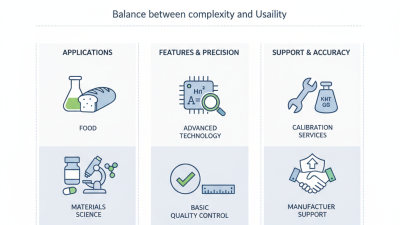
Smart densimeters differ across industries because applications vary in their required precision, durability, and data integration. To choose the best option in 2026, assess verified accuracy, usability, maintenance needs, and total cost rather than focusing on a single specification. A suitable Density Monitor should match your measurement tasks, fit your operating environment, and present results clearly enough to support confident decisions.