SF6 Gas Density Monitor
 SF6 gas density transmitter
 SF6 gas valve
 SF6 Gas Detection Analyzer Series
 Leakage Current Monitoring Series
 Transformer Accessories Series
 +86-400-820-1296
Leave Your Message
-
CONTACT NUMBER
-
 CONTACT NUMBER
So, picking from the 2026 top smart densimeter types? It takes more than comparing display size or the accuracy number in an ad. Buyers around the world really need to know how each instrument holds up in actual working conditions—not just in a showroom. Oscillating U-tube densimeters, for example, give labs fast digital readings and great repeatability. Portable models are handy for field checks around storage tanks, blending lines, and production areas. And inline smart densimeters can keep an eye on continuous processes, though how well they’re installed makes a big difference to the results.
Accuracy isn’t the whole story, either. Temperature compensation, sample viscosity, cleaning procedures, calibration stability, and software compatibility all deserve just as much attention. A supplier you can rely on should offer traceable calibration data, clear instructions, real service support, and practical training. It’s also worth asking how the device handles bubbles, suspended particles, or shifting ambient temperatures. Those small details? They matter.
In real applications, weaknesses show up. A neat spec sheet can still fool you. Some models look extremely precise on paper but end up needing careful sampling and frequent verification. Others offer convenient connectivity but fall short on support in remote regions. So buyers should compare total ownership cost, not just the first quotation. That means replacement cells, sensors, calibration standards, software access, and technician time. Procurement teams that handle lab equipment alongside Transformer Accessories may also need consistent documentation across several suppliers. That requirement is easy to miss.
This guide looks at the major smart densimeter types for international purchasing decisions. It covers laboratory, portable, and process environments using practical selection criteria. The recommendations are evidence-oriented, but no single ranking will fit every facility. Users should confirm their local measurement requirements before ordering. Even experienced teams can overlook one thing: the instrument has to suit the sample, the workflow, and the people operating it.
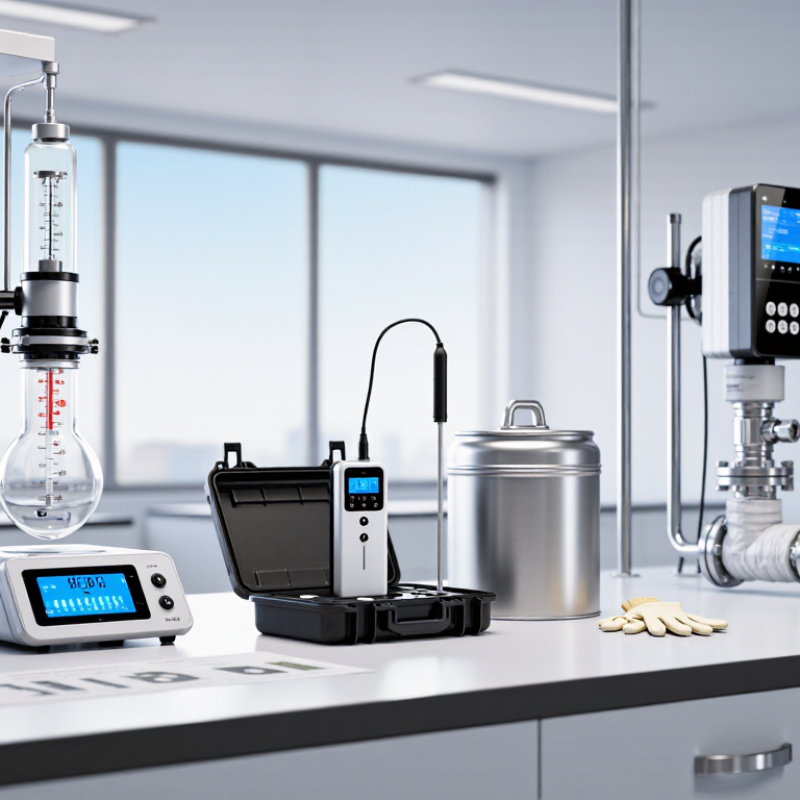
Smart densimeters measure liquid density by detecting how a sample responds inside a precisely controlled measuring cell. A common method uses an oscillating U-tube. When liquid fills the tube, its mass changes the tube’s vibration period. The instrument converts that period into density through a calibrated mathematical relationship.
Temperature matters greatly. Liquid density can shift noticeably with small temperature changes, so smart models use built-in temperature sensors and compensation algorithms. For example, a petroleum sample at 20°C may produce a different reading at 25°C. Stable temperature control improves repeatability, but it does not remove every source of error.
Clean sampling is essential.
Air bubbles, residue, or incomplete filling can distort results. Experienced technicians usually rinse the cell, inspect the sample flow, and compare readings with a certified reference liquid. In industrial work, a densimeter may support quality checks for chemicals, food liquids, or Power Transformer insulating fluids. Automatic data logging helps trace each measurement, including time, temperature, and operator details.
No instrument is perfect. I would still question an unusual value rather than accept the display immediately. Calibration drift, contamination, and poor sample preparation can appear as genuine process changes. Different smart densimeter types may also use different cell designs and software models, so users should verify the measurement range, uncertainty, and maintenance procedure before purchase.
| Densimeter Type | Primary Measurement Principle | Typical Density Range (g/cm³) |
Typical Resolution | Typical Sample Volume | Temperature Control | Best-Suited Applications | Key Buying Considerations |
|---|---|---|---|---|---|---|---|
| Digital Oscillating U-Tube | A liquid-filled hollow tube oscillates at a frequency that changes with the mass of the liquid inside. The instrument converts oscillation data into density. | 0.6–3.0 | About 0.00001–0.0001 | Approximately 1–3 mL | Integrated or external temperature control; commonly around 15–40°C | Laboratory quality control, beverages, chemicals, petroleum products, and pharmaceutical liquids | Temperature stability, bubble detection, viscosity limits, cleaning validation, and calibration with certified reference liquids |
| Portable Digital Oscillating-Tube | Uses the same oscillating-tube concept as a benchtop instrument in a battery-powered handheld format. | 0.7–2.0 | About 0.0001 | Approximately 1–2 mL | Usually ambient-temperature measurement with temperature compensation | Incoming inspection, field testing, tanks, pipelines, beverage production, and mobile laboratories | Battery life, IP protection, sample handling, measurement speed, portability, and resistance to vibration |
| Benchtop Pycnometer | Determines density from a known chamber volume and the measured mass of the sample occupying that volume. | 0.5–3.0 | About 0.0001 | Typically 10–100 mL, depending on vessel size | Usually requires a controlled laboratory temperature and thermal equilibration | Paints, inks, powders, pastes, viscous liquids, and materials unsuitable for narrow flow cells | Vessel calibration, complete filling, air removal, evaporation control, and operator handling time |
| Hydrostatic Weighing Densimeter | Calculates density from buoyancy: the difference between an object's mass in air and its apparent mass when immersed in a liquid. | 0.1–20.0 | About 0.0001–0.001 | A solid sample or immersion liquid volume sufficient to cover the specimen | Generally ambient or thermostatically controlled bath conditions | Plastics, metals, ceramics, rubber, stones, and solid components | Surface wetting, trapped bubbles, specimen porosity, immersion-liquid compatibility, and balance stability |
| Digital Hydrometer | A buoyant sensor or float detects the equilibrium position in a liquid, and electronics convert the result to density or specific gravity. | 0.6–2.0 | About 0.0005–0.001 | Approximately 20–100 mL, depending on design | Temperature sensor and automatic correction are common; active control is less common | Brines, coolants, battery electrolytes, fermentation liquids, and routine process checks | Float cleanliness, sample depth, bubbles, viscosity, temperature correction, and chemical resistance |
| Refractometer-Densimeter | Measures the refractive index from light refraction at a sample interface and correlates it with concentration or density for suitable solutions. | Application-dependent; commonly reported as specific gravity or concentration | Typically equivalent to about 0.0001–0.001 density units after calibration | Approximately 0.1–1 mL | Usually includes automatic temperature compensation; controlled measurement is preferred for high accuracy | Sugar solutions, salt solutions, coolants, food liquids, and clear process samples | Requires a validated concentration relationship; suspended solids, color, turbidity, and multiple solutes can affect results |
| Coriolis Mass-Flow Densitometer | Measures the effect of fluid density on the vibration and phase response of one or more flow tubes, often alongside mass flow. | Approximately 0.3–3.0 | Often about 0.0001–0.001 in process conditions | Continuous flowing stream; no fixed laboratory aliquot | Process temperature measurement and compensation; some systems provide thermal conditioning | Continuous monitoring of chemicals, fuels, food liquids, pharmaceuticals, and custody-transfer processes | Pressure drop, flow profile, entrained gas, installation orientation, process vibration, and line-size compatibility |
| Ultrasonic Density Meter | Uses the relationship between ultrasonic sound velocity, acoustic attenuation, and fluid density established through calibration. | Approximately 0.5–2.5 | Typically about 0.0005–0.002 | Continuous inline or bypass-stream measurement | Usually uses an integrated temperature sensor for compensation | Slurries, emulsions, wastewater, hydrocarbons, and liquids where low maintenance is important | Gas bubbles, suspended particles, acoustic fouling, fluid composition, pipe installation, and process calibration |
The TIMB-5R transformer intelligent maintenance-free breather is designed for oil-immersed transformers equipped with conservator tanks. During normal operation, temperature changes cause the transformer to inhale and exhale air. The breather filters moisture and impurities from incoming air before they can reach the insulating oil, helping preserve its dielectric strength and improve the reliability of the transformer insulation system.
Built-in humidity monitoring and intelligent control distinguish between inhalation and exhalation conditions in real time. When the desiccant approaches moisture saturation, the integrated heating unit automatically starts a regeneration cycle at the appropriate moment. This timing prevents heated, moisture-laden air from being drawn back into the transformer during inhalation. After regeneration, the desiccant can be reused repeatedly, reducing the need for frequent replacement and routine manual inspection.
The maintenance-free breather is suitable for substations, power plants, industrial distribution systems, renewable energy facilities, and other locations where transformer availability is essential. Its automated operation reduces field visits, material consumption, maintenance labor, and exposure to on-site service risks. Continuous status monitoring also supports earlier identification of abnormal breathing or humidity conditions, helping operators maintain stable transformer performance in demanding outdoor and remote applications.
Oscillating U-tube sensors suit controlled laboratories and quality-control rooms. They detect frequency changes as liquid density changes. Accuracy can approach ±0.0001 g/cm³ under stable conditions. Portable models may be slightly less precise. Small bubbles still cause trouble.
Many instruments cover about 0 to 3 g/cm³. Choose a range with practical headroom above your highest sample. A narrow range may overload near the limit. An extremely broad range may reduce useful resolution. This choice is easy to underestimate.
Temperature compensation is essential when samples change temperature. A liquid at 25°C may read differently at 30°C. Air bubbles, residue, and rushed cleaning can distort results. Inspect the measurement cell under bright light. Tiny bubbles hide easily.
Flow-based sensors suit processing lines with changing temperature and flow. They measure density while liquid passes through a vibrating tube. Typical accuracy may range from ±0.0005 to ±0.002 g/cm³. Pressure, viscosity, and tube design affect performance. The range is not universal.
They can support rapid screening of known liquids. However, they require liquid-specific calibration. Unknown mixtures may produce uncertain results. Use confirmatory testing when composition varies. Fast does not mean reliable.
Ethernet, Wi-Fi, and cellular gateways can transmit density and temperature data. Technicians can review readings without approaching hot equipment. Local memory should store data during connection failures. Wireless signals may fail during storms or maintenance. Backup storage matters.
Each record should include sensor ID, operator, timestamp, and measurement conditions. Useful systems support CSV export, API access, permissions, and audit trails. Calibration reminders can reduce missed maintenance. Incorrect reference values can still create misleading results. Automation is not judgment.
Confirm density range, temperature, viscosity, cleaning method, and required accuracy. Review calibration certificates and traceability information. Check display language, data export, enclosure protection, and battery performance. Ask about spare sensors, training, service, and delivery support. The cheapest option may cost more later.
The 2026 smart densimeter market offers global buyers a broad selection of instruments designed for fast, accurate, and connected density measurement. This article explains fundamental measurement principles, including oscillating-tube, digital buoyancy, and sensor-based technologies, while comparing their accuracy, operating ranges, temperature compensation, and suitability for different liquids and materials. It also highlights how modern densimeters support reliable testing in laboratories, manufacturing, food processing, chemicals, energy, pharmaceuticals, and quality control.
Beyond measurement performance, smart densimeters increasingly provide touchscreen operation, automated sampling, self-check functions, wireless or network connectivity, cloud-ready data management, and traceable reporting. Buyers should evaluate sample characteristics, required precision, measurement speed, environmental conditions, calibration needs, integration capabilities, maintenance requirements, and total ownership costs. Whether used for routine inspection, process automation, or advanced research, the right instrument should match the application while supporting efficient workflows and consistent data. Related equipment planning, including Transformer Accessories where electrical integration is required, should also be considered as part of a complete purchasing strategy.